
Seamless Integration
Implementing a sleep program shouldn’t disrupt your workflow. Our team provides end-to-end support, from patient screening to follow-up care, allowing you to offer Oral Appliance Therapy (OAT) with minimal staff involvement.


Elevate Your OAT Program
If you’re a dental sleep specialist who has struggled to establish a successful Oral Appliance Therapy (OAT) clinic or build reliable physician referral networks, DSM-MD offers a turnkey solution. We understand the frustration many dentists face when referral partners expect insurance billing capabilities and your practice is structured around cash-pay models. Our collaborative framework solves this by integrating you directly into a physician-led care model, enabling full insurance utilization while expanding your patient base.
Already have a thriving oral appliance program? DSM-MD can pair you with enthusiastic physicians to amplify your reach, create additional revenue streams, and bring effective OSA treatment to more patients in your community.
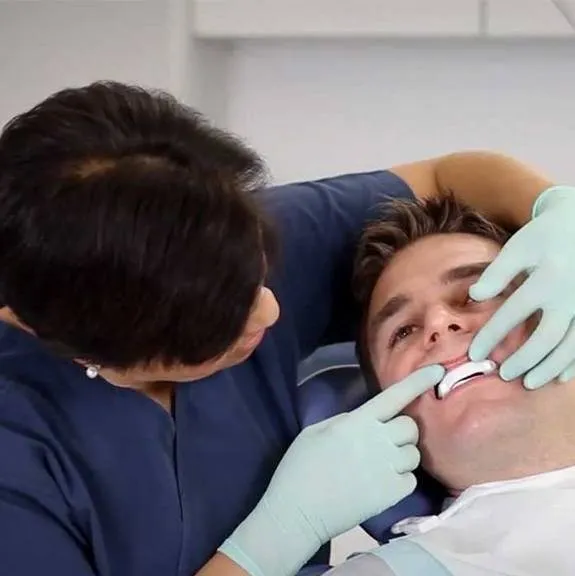
Empowering Dentists Through Partnership
At DSM-MD, we understand the unique challenges dental sleep specialists face when navigating insurance barriers, building referral networks, and delivering consistent outcomes. Our model is designed to eliminate those roadblocks. By integrating dentists directly into a collaborative care framework with trusted physicians, we provide the structure, support, and systems needed to grow a successful OAT practice, without the burden of administrative complexity or disconnected care models.
Oral Appliance Therapy (OAT) continues to demonstrate strong, clinically significant outcomes in the treatment of obstructive sleep apnea (OSA). These results not only support OAT as a frontline therapy but validate its long-term value in improving both clinical metrics and patient well-being.

Best Practices
Successful implementation of OAT requires more than simply prescribing a device. The most effective dental sleep practices embrace a patient-centered philosophy, starting with proper case selection, clear patient communication, and long-term follow-up. Prioritize patients with mild to moderate OSA, those with positional apnea, or individuals who have not succeeded with CPAP therapy. Use objective data like AHI for baseline and progress tracking but also focus on quality of life, cognitive function, and cardiovascular metrics to guide care. By balancing clinical insight with compassionate treatment, you can maximize both patient outcomes and practice growth.
Clinical Reminders:
How DSM-MD Supports Dentists
At DSM-MD, we go beyond conventional dental sleep support by offering a fully integrated, physician-collaborative model that helps dentists provide high-quality OSA treatment with less administrative burden. We equip your clinical team to confidently present OAT as a first-line treatment to patients, support you with streamlined insurance billing, and connect you with like-minded physicians who value the importance of collaborative care.
Research confirms that Oral Appliance Therapy is a safe, effective, and well-tolerated treatment option for patients with obstructive sleep apnea. It matches the health outcomes of CPAP in many cases especially when considering real-world patient adherence and offers improvements in quality of life, cardiovascular health, and daytime function. With DSM-MD handling the program framework and coordination, you’re free to focus on delivering excellent patient care.
Implementing a sleep program shouldn’t disrupt your workflow. Our team provides end-to-end support, from patient screening to follow-up care, allowing you to offer Oral Appliance Therapy (OAT) with minimal staff involvement.

Through our collaborative model, physicians can generate a passive revenue stream without additional overhead.

We prioritize patient education and engagement, helping individuals understand their treatment options while maximizing their medical benefits. This leads to higher compliance, improved sleep health, and better long-term outcomes.

Navigating insurance and billing for sleep medicine can be complex. DSM-MD takes care of the administrative and legal aspects, ensuring smooth reimbursement while keeping your practice compliant with industry standards.
In patients with evaluable data, there was an 80% success rate for treatment of OSA using a custom-fabricated adjustable MAD including substantial numbers of patients with moderate and severe disease.
In a crossover trial of 61 adults with polysomnography-confirmed OSA, four weeks of mandibular advancement splint therapy produced a significant fall in 24-hour diastolic blood pressure, driven mostly by a drop of about 3 mmHg in the early morning, with a similar early-morning drop in systolic pressure.
Gotsopoulos H, Kelly JJ, Cistulli PA. Oral appliance therapy reduces blood pressure in obstructive sleep apnea: a randomized, controlled trial. Sleep. 2004;27(5):934–41.
Read on PubMedCPAP and mandibular advancement devices produced comparable gains in daytime sleepiness and quality of life. Patients wore their oral appliance an average of 6.5 hours a night versus 5.2 hours for CPAP, which helps explain why the two therapies land at similar real-world effectiveness.
Phillips CL, Grunstein RR, Darendeliler MA, et al. Health outcomes of continuous positive airway pressure versus oral appliance treatment for obstructive sleep apnea: a randomized controlled trial. Am J Respir Crit Care Med. 2013;187(8):879–87.
Read on PubMedOver one year of mandibular advancement device therapy, patients with mild to moderate OSA improved on perceptive ability, convergent thinking, and psychomotor reaction time, alongside less daytime sleepiness and better quality of life.
Galic T, Bozic J, Ivkovic N, et al. Improvement of cognitive and psychomotor performance in patients with mild to moderate obstructive sleep apnea treated with mandibular advancement device: a prospective 1-year study. J Clin Sleep Med. 2016;12(2):177–86.
Read on PubMed